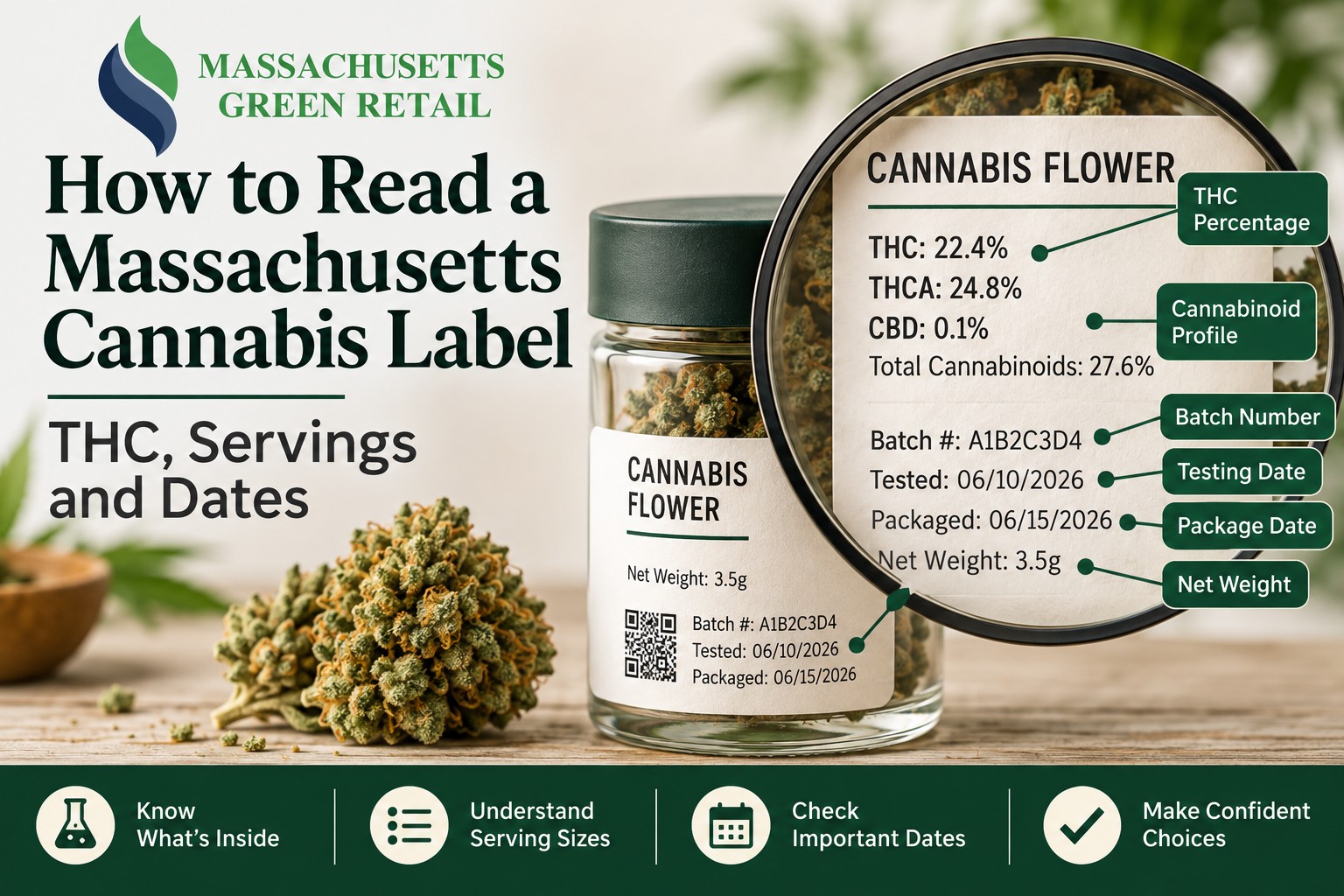
A cannabis package can contain a surprising amount of information in a small space.
Product name, THC percentage, serving size, total cannabinoids, ingredients, batch numbers, testing dates, package dates, warnings, and manufacturer information may all compete for attention. Understanding what those details mean can help Massachusetts shoppers compare products more accurately.
The most important rule is to read the label on the specific package you are purchasing. Cannabis results can change from one production batch to another, even when the strain, brand, and package size remain the same.
Start With the Product Format
Before comparing potency, identify what type of cannabis product you are viewing.
Common formats include:
- Whole flower
- Pre-rolls
- Edibles
- Cannabis beverages
- Vape cartridges
- Disposable vaporizers
- Concentrates
- Tinctures
- Topicals
Potency is not presented the same way across every category. Flower is commonly described using percentages, while edibles and beverages usually display THC in milligrams per serving and per package.
A 20% flower product should not be directly compared with a 20-milligram edible. Those numbers describe different measurements and methods of consumption.
THC Percentage vs. THC Milligrams
Cannabis labels commonly express THC using either a percentage or a milligram amount.
Percentage
Percentages are usually most relevant for flower, pre-rolls, and certain concentrates. The percentage describes how much of the product’s measured weight is represented by a particular cannabinoid.
A higher percentage does not automatically mean better flower. Freshness, aroma, cultivation, storage, moisture, and personal preference also matter.
Milligrams
Milligrams are especially important for edibles, beverages, tinctures, and other products divided into servings.
Check both:
- THC in one serving
- Total THC in the entire package
A package containing 100 milligrams of THC may be divided into 20 servings of 5 milligrams each. The package total is not necessarily the recommended amount to consume at once.
Why the Cannabinoid Profile Contains Several Numbers
A flower label may list several cannabinoids, including THC, THCA, CBD, and CBDA.
THCA is a naturally occurring cannabinoid in raw cannabis flower. Heat converts a portion of THCA into THC during smoking, vaporization, or cooking. This is why labels and dispensary menus may show separate THC, THCA, and total-cannabinoid figures.
Do not add every number on the package together and assume the result represents the product’s effects. Different cannabinoids and label calculations are not interchangeable.
When comparing two products, use the same measurement from each label. Comparing the THCA number on one package with the total THC number on another can create a misleading comparison.
Read the Serving Information Carefully
Serving information is particularly important for edibles and beverages.
Review:
- Milligrams of active THC per serving
- Number of servings in the package
- Total active THC in the package
- Physical size of one serving
- Directions for use
- Delayed-effect warnings
A single container may hold several servings, even when it resembles an ordinary snack, candy, or drink.
Time-sensitive Massachusetts information—verified September 21, 2026: Current adult-use regulations require edible labels to identify the serving size, number of servings, and total active THC. They also require a warning that edible impairment may be delayed by two hours or more. Review the current Massachusetts adult-use regulations.
Delayed effects are not an indication that the product failed to work. Taking another serving too quickly can make the eventual experience stronger than intended.
Check the Ingredients and Allergen Information
Manufactured cannabis products can contain much more than cannabis extract.
Depending on the product, the ingredient list may include:
- Sugar or sweeteners
- Gelatin or pectin
- Chocolate
- Flavorings
- Coconut or other oils
- Terpenes
- Carrier ingredients
- Color additives
- Thickening or thinning agents
Edible labels should also identify known allergens when applicable. Anyone with a food allergy or dietary restriction should read the full label instead of relying only on the product’s flavor or menu description.
For vaporizers and concentrates, review whether additional terpenes or other additives are identified. The oil type and ingredient list can be more informative than a broad term such as “vape.”
What Do the Testing and Batch Details Mean?
Massachusetts cannabis packages include identifying information that connects the product to a particular batch.
Depending on the format, the label may show:
- Production or cultivation batch number
- Product or strain name
- Cultivator or manufacturer
- License or registration number
- Testing date
- Creation, harvest, or packaging date
- Recommended use-by or expiration date
- Net weight or volume
The batch number matters because laboratory results apply to a particular tested batch—not every product ever sold under that name.
Current Massachusetts regulations require adult-use cannabis products to be tested before retail sale and require applicable labels to include testing and batch information. Testing does not make cannabis risk-free, but it provides traceability and confirms that the product completed the state’s required testing process. See sections 500.105 and 500.160 of the regulations.
Packaging Date Is Not the Same as Testing Date
Several dates may appear on one cannabis package.
The testing date indicates when a sample from the batch was analyzed. The packaging date identifies when the product was placed into its retail package. Edibles and concentrates may also display creation and recommended use-by dates.
These dates serve different purposes. A recently packaged product is not necessarily from a recently harvested or manufactured batch.
For flower, older dates may help explain dryness or reduced aroma, but dates alone cannot establish how the product was stored or its present condition.
Recognize the Required Warnings and Symbols
Licensed Massachusetts products carry required warnings and cannabis-identification symbols. Packaging must generally be child-resistant, and multi-serving products must be resealable when reasonably practical.
Those features are safety controls—not evidence that a package is safe for children to handle.
Keep cannabis in its original labeled container whenever possible. Removing a product from its packaging makes it easier to lose serving, ingredient, batch, and warning information.
Compare the Entire Label, Not One Number
A practical cannabis guide for beginners should consider more than THC.
Before purchasing, compare:
- Product format
- THC per serving or THC percentage
- Total package content
- Other listed cannabinoids
- Ingredients and allergens
- Cultivator or manufacturer
- Testing and packaging dates
- Net weight
- Batch information
- Storage instructions
- Compatible equipment
A product with the highest THC figure is not automatically the best value or the most appropriate choice.
Compare Cannabis Products at Massachusetts Green Retail
Massachusetts Green Retail helps adult shoppers understand product formats, serving information, package dates, ingredients, and current batch results.
At our cannabis dispensary in Lynn, MA, customers can compare products from licensed Massachusetts cultivators and manufacturers with help from the MGR team.
Browse the Massachusetts Green Retail menu to order cannabis online for North Shore pickup, or visit us at 829 Boston Street in Lynn.
Responsible-Use Note
Cannabis is intended only for adults 21 years of age or older. Begin conservatively with an unfamiliar product and allow sufficient time before considering more. Never drive or operate machinery while impaired. Keep all cannabis sealed, clearly labeled, and securely stored away from children and pets.
 Massachusetts Green Retail Inc. offers a wide variety of top-notch recreational products at unbeatable prices, all while staying committed to our local roots! Shop online for pickup and come visit us to discover not only amazing deals but also a friendly atmosphere where our knowledgeable team is ready to help you find exactly what you need for a great experience.