
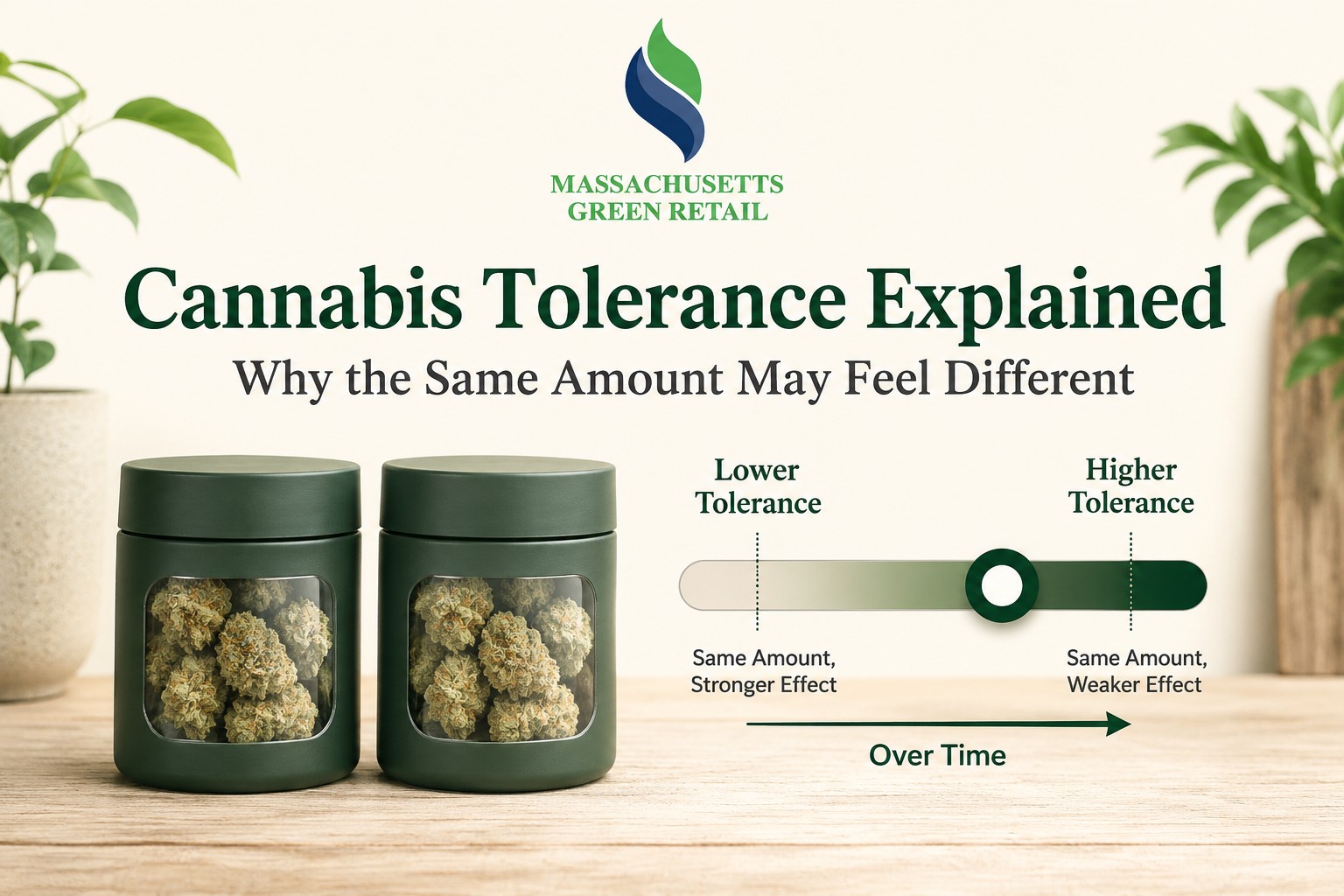
A cannabis product that once felt strong may seem less noticeable after repeated use. This can happen because the body develops tolerance, but tolerance is not the only possible explanation.
The current batch, product age, serving size, consumption method, frequency of use, timing, food intake, and personal circumstances may all influence the experience. Before automatically moving to a stronger product or larger amount, it helps to examine what actually changed.
What Is Cannabis Tolerance?
Tolerance means a person experiences a reduced response to a substance after repeated exposure. As tolerance develops, the amount previously used may produce a less noticeable experience than it once did.
Cannabis tolerance does not develop identically for everyone. It can vary according to:
- Frequency of cannabis use
- Amount used per session
- THC concentration
- Product format
- Individual biology
- Length of use
- Time between sessions
Someone who uses a high-THC product several times every day may experience tolerance differently from an adult who consumes a small serving occasionally.
Tolerance also does not determine whether someone is responsible or irresponsible. It is a biological response that should be recognized when making decisions about frequency, potency, and serving size.
Does Tolerance Mean the Product Is Weak?
Not necessarily.
Cannabis is an agricultural and manufactured product, so differences can occur between cultivators, formats, and batches. Two packages with the same strain name may have different cannabinoid results, terpene profiles, production dates, or serving instructions.
Before assuming tolerance is responsible, compare:
- Product and brand
- Batch information
- THC and THCA results
- Milligrams per serving
- Package and testing dates
- Whole-flower or ground-flower format
- Extract type
- Device settings, when using a vaporizer
- How the product was stored
A cartridge used with a nearly depleted battery may perform differently. An edible serving may be divided differently than expected. Flower from a new batch may have a different chemical profile from an earlier purchase.
The package provides more reliable information than memory alone.
Is Tolerance the Same Across Every Cannabis Product?
Not always.
Tolerance to one familiar routine does not guarantee that every cannabis format will feel identical. Inhaled products and edible products enter the body through different routes, and their onset and duration can differ substantially.
Switching formats should not be treated as a way to “beat” tolerance. An adult familiar with flower may still be inexperienced with edibles, concentrates, or beverages.
That distinction is especially important with edibles. Their effects can take considerably longer to become apparent, so taking more too quickly may lead to consuming substantially more THC than intended.
The Massachusetts Cannabis Control Commission advises adults to “start low and go slow,” noting that edible impairment may be delayed by two hours or more. Review the Commission’s current responsible-consumption guidance.
Why Automatically Increasing THC Can Be a Problem
When a familiar product seems less noticeable, the simplest response may appear to be purchasing the highest-THC option available.
That approach can create several problems:
- A larger amount may exceed what was actually needed
- A new format may have unfamiliar onset and duration
- Concentrates may be more potent than familiar flower
- Increasing potency may continue the same tolerance pattern
- A delayed product may become stronger after another serving is taken
- Higher THC does not guarantee a preferred experience
Tolerance can also change after a period of reduced or discontinued use. Returning immediately to a previous serving amount may therefore produce a stronger response than expected.
Treat your current tolerance as current information—not a permanent personal setting.
What Is a Cannabis Tolerance Break?
A tolerance break, sometimes called a “T-break,” is a planned period without cannabis. Some adults use the term for a few days, while others mean a longer pause.
There is no single break length guaranteed to produce the same result for everyone. Research does not support a universal countdown that completely “resets” every person’s tolerance.
A pause can still provide an opportunity to evaluate:
- How frequently cannabis had become part of the routine
- Whether serving sizes had been increasing
- How much money was being spent
- Whether use was interfering with responsibilities
- Whether cannabis was still creating the intended experience
- How the person feels without it
A tolerance break should not be framed as a challenge to consume an exceptionally large amount afterward. If cannabis use resumes, a previously familiar serving may feel stronger, making a conservative restart important.
Can Stopping Cannabis Cause Withdrawal Symptoms?
Some frequent users report withdrawal symptoms when they substantially reduce or stop cannabis.
The National Institute on Drug Abuse lists possible symptoms including irritability, nervousness, restlessness, reduced appetite, sleep difficulty, unusual dreams, headaches, sweating, abdominal discomfort, and tremor. Not everyone experiences withdrawal, and symptom severity varies. Read NIDA’s current cannabis research overview.
This does not mean every person with tolerance has a cannabis use disorder. Tolerance, withdrawal, and cannabis use disorder are related concepts, but they are not interchangeable.
A healthcare professional can provide appropriate guidance when symptoms are severe, persistent, or concerning.
When Should Someone Reconsider Their Cannabis Use?
Tolerance deserves closer attention when cannabis use begins affecting everyday life.
Potential warning signs include:
- Repeatedly using more than intended
- Unsuccessful attempts to reduce use
- Spending substantial time obtaining, using, or recovering from cannabis
- Continuing despite recurring work, relationship, financial, or safety problems
- Giving up important activities
- Using in hazardous situations
- Feeling unable to function normally without cannabis
These signs should not be used to diagnose yourself or another person. They are reasons to speak honestly with a qualified healthcare or substance-use professional.
Resource verified September 1, 2026: The Massachusetts Substance Use Helpline offers confidential support at 800-327-5050 and through HelpLineMA.org. The service is a support resource, not an emergency line.
How to Shop More Deliberately
When comparing products, focus on more than the largest THC number.
Consider:
- Current tolerance
- Frequency of use
- Serving size
- Product format
- Onset and expected duration
- Previous experience with the producer
- Current batch information
- Whether you have a safe place and sufficient time
- Whether you will need to drive or supervise someone
Keeping brief notes can help separate tolerance from product variation. Record the brand, format, serving amount, batch, time used, and whether the experience matched your expectations.
Visit Massachusetts Green Retail in Lynn
Massachusetts Green Retail helps adults compare cannabis products using current package information, serving sizes, formats, and personal experience—not THC percentage alone.
At our cannabis dispensary in Lynn, MA, customers can ask the MGR team about flower, pre-rolls, edibles, beverages, vaporizers, concentrates, and lower-potency options currently available.
Browse the Massachusetts Green Retail online menu to order cannabis online for North Shore pickup, or visit us at 829 Boston Street in Lynn.
Responsible-Use Note
Cannabis is intended only for adults 21 years of age or older. Begin conservatively with unfamiliar products and after any period of reduced use. Do not drive or operate machinery while impaired. Keep cannabis locked in its original packaging away from children and pets. Anyone concerned about their cannabis use should consult a qualified healthcare or substance-use professional.
 Massachusetts Green Retail Inc. offers a wide variety of top-notch recreational products at unbeatable prices, all while staying committed to our local roots! Shop online for pickup and come visit us to discover not only amazing deals but also a friendly atmosphere where our knowledgeable team is ready to help you find exactly what you need for a great experience.