Massachusetts voters will face a major decision about the future of legal cannabis this November.
On November 3, 2026, voters across the Commonwealth will see Question 8: Prohibit Retail Sale of Adult Recreational Use Marijuana on the statewide ballot. The proposal would significantly roll back Massachusetts’ current adult-use cannabis system, nearly ten years after voters originally approved recreational marijuana legalization in 2016. (Massachusetts Secretary of State)
For cannabis consumers, employees, businesses, and communities throughout Massachusetts, the outcome could reshape the industry as we know it.
What Is Question 8?
Question 8 stems from Initiative Petition 25-10, formally titled an Initiative Petition for a Law Relative to Regulating Marijuana.
The proposal would repeal Massachusetts General Laws Chapters 94G and 64N, which currently provide much of the legal framework for recreational cannabis possession, cultivation, regulation, retail sales, and taxation. The state’s medical cannabis program under Chapter 94I would remain in place. (Justia Law)
In simpler terms, Massachusetts would move away from its current licensed recreational cannabis marketplace.
If the measure passes, the law is scheduled to take effect on January 1, 2028. (Justia Law)
Would Cannabis Become Completely Illegal Again?
No.
This is an important distinction.
Question 8 would eliminate the state’s legal recreational retail system, but it would not completely recriminalize possession of small amounts of cannabis.
Under the proposed law:
- Adults 21 and older could possess up to one ounce without a criminal or civil penalty.
- That one-ounce limit could include no more than 5 grams of cannabis concentrate.
- Adults 21 and older could transfer or gift up to one ounce to another adult.
- Possession of more than one ounce but no more than two ounces would generally result in a $100 civil penalty and forfeiture of the cannabis.
- The medical marijuana program would remain legal.
The Massachusetts Supreme Judicial Court confirmed these major provisions while reviewing the initiative earlier this year. (Justia Law)
So while cannabis itself would not suddenly become completely illegal, the regulated recreational marketplace where adults currently purchase cannabis would be fundamentally changed.
What Would Happen to Recreational Dispensaries?
Question 8 would repeal the laws authorizing Massachusetts’ licensed adult-use cannabis market.
Existing recreational cannabis businesses would be permitted to pursue an expedited process to become licensed medical marijuana businesses. They could also sell remaining recreational inventory to licensed medical marijuana establishments during the transition. (Justia Law)
However, businesses operating primarily or exclusively within the recreational market could face an enormous challenge.
Massachusetts currently has an established ecosystem of licensed:
- Dispensaries
- Cultivators
- Product manufacturers
- Testing laboratories
- Delivery operators
- Distributors
- Ancillary businesses
- Cannabis industry employees
A repeal would therefore reach far beyond the stores where consumers purchase cannabis.
What About Home Growing?
Massachusetts’ current adult-use law permits adults 21 and older to cultivate cannabis at home, subject to limits. Current law allows up to six marijuana plants for one adult and no more than twelve plants within a residence. (Massachusetts Government)
Because Question 8 would repeal Chapter 94G, those adult-use home cultivation protections would also disappear.
That makes the proposal significantly broader than simply shutting down recreational dispensaries.
Why Are Supporters Pushing for a Repeal?
Supporters of Question 8 have raised concerns related to public health, cannabis potency, youth exposure, impaired driving, addiction, and the broader societal impact of commercial cannabis legalization.
The campaign supporting the proposal argues that Massachusetts can maintain decriminalization for limited cannabis possession and preserve medical marijuana while moving away from the commercial recreational marketplace.
These concerns will likely continue to play a major role in the statewide debate leading into November.
Why Are Cannabis Businesses and Advocates Opposing It?
Opponents argue that eliminating regulated cannabis sales would not eliminate demand for cannabis.
Instead, they warn that consumers who currently purchase tested and tracked products from licensed dispensaries could be pushed toward an unregulated market.
Licensed Massachusetts dispensaries operate under extensive rules governing testing, product tracking, security, identification requirements, packaging, labeling, and age restrictions.
Opponents also point to the jobs, businesses, local economic activity, and state and municipal tax revenue that have developed around Massachusetts’ cannabis industry since legalization.
The debate therefore isn’t simply about whether people should use cannabis. It is also about where cannabis comes from, how it is regulated, and whether legal businesses or an illicit marketplace should meet consumer demand.
Massachusetts Recently Expanded Cannabis Reform
The timing of the ballot question is especially noteworthy because Massachusetts lawmakers recently moved in the opposite direction.
On April 19, 2026, Governor Maura Healey signed legislation modernizing the Commonwealth’s cannabis laws. The legislation restructured the Cannabis Control Commission, changed licensing rules, and increased the amount of cannabis adults can legally possess outside the home. (Massachusetts Government)
Massachusetts currently allows adults 21 and older to possess up to two ounces of marijuana outside the home and up to ten ounces inside their primary residence, in addition to cannabis legally produced through permitted home cultivation. (Massachusetts Government)
Question 8 would represent a substantial reversal of that direction.
How Did Question 8 Reach the Ballot?
Supporters gathered the signatures required through Massachusetts’ initiative petition process.
In July 2026, the Massachusetts Elections Division reported that the marijuana petition submitted 12,511 certified signatures during its final signature round, exceeding the 12,429 required. (Massachusetts Secretary of State)
The proposal also survived legal challenges.
On June 12, 2026, the Massachusetts Supreme Judicial Court ruled that the Attorney General’s certification and official summary of Initiative Petition 25-10 complied with the Massachusetts Constitution. (Justia Law)
A subsequent challenge before the State Ballot Law Commission also failed, clearing the measure for the November ballot. State election officials formally assigned the proposal Question 8 on July 21. (Massachusetts Secretary of State)
What Does a YES or NO Vote Mean?
For voters, the basic distinction is straightforward:
YES on Question 8: Supports repealing the laws authorizing Massachusetts’ regulated recreational cannabis retail market and implementing the replacement system described in the initiative.
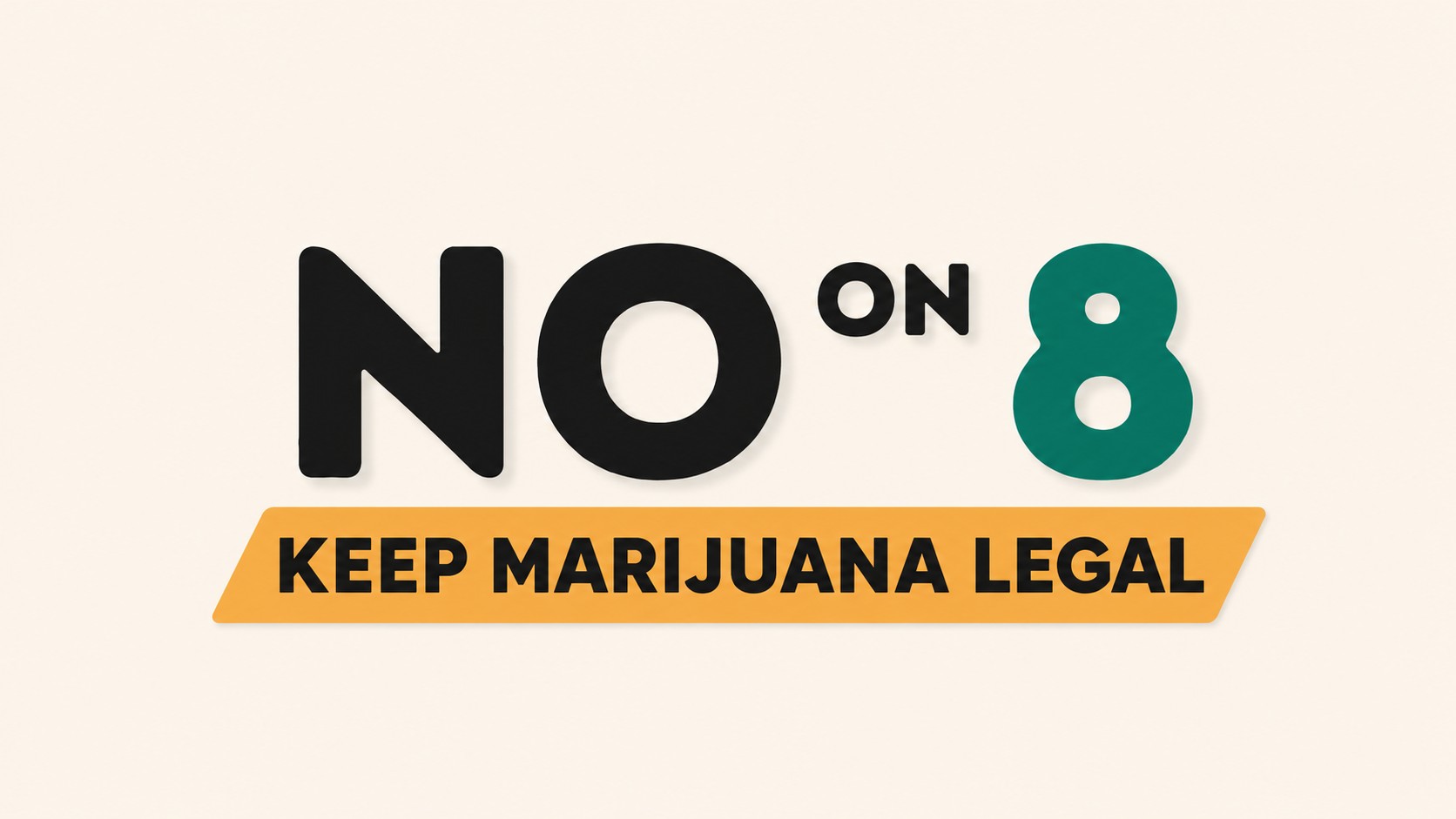
NO on Question 8: Keeps Massachusetts’ existing adult-use cannabis legalization framework in place.
Medical cannabis would remain legal under either outcome.
Why Consumers Should Pay Attention
Massachusetts cannabis has changed dramatically since legalization.
Consumers today can walk into licensed dispensaries and choose among regulated flower, concentrates, edibles, beverages, pre-rolls, vaporizers, and other products that undergo required compliance processes before reaching store shelves.
Question 8 asks Massachusetts voters whether that recreational marketplace should continue.
Regardless of where someone stands politically, cannabis consumers should understand that this ballot question could have a direct impact on where they can purchase cannabis, what they can legally grow at home, how much they can possess, and what the Massachusetts cannabis industry looks like going forward.
The Vote Is November 3, 2026
Massachusetts originally voted to legalize recreational cannabis in 2016.
Ten years later, voters are being asked to reconsider a significant portion of that decision.
Question 8 will appear on ballots statewide during the November 3, 2026 Massachusetts State Election. (Massachusetts Secretary of State)
For consumers and businesses throughout the Commonwealth, it is one of the most consequential cannabis policy votes Massachusetts has faced since legalization itself.
Stay informed, understand what the proposal actually does, and make sure you know what Question 8 means before heading to the polls.
 Massachusetts Green Retail Inc. offers a wide variety of top-notch recreational products at unbeatable prices, all while staying committed to our local roots! Shop online for pickup and come visit us to discover not only amazing deals but also a friendly atmosphere where our knowledgeable team is ready to help you find exactly what you need for a great experience.